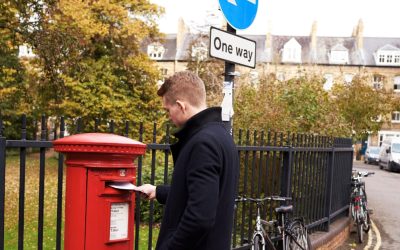
So, when thinking about the cost of a direct mail campaign, what do you think of? Most answer printing and postage. Which are certainly important, but they’re only part of the picture.
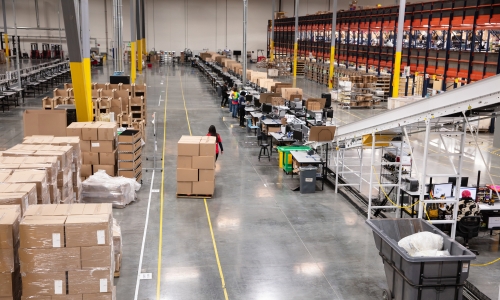
Between approving your artwork and seeing your campaign arrive on someone’s doorstep sits an entire fulfilment process that most people never see. It’s here that data is checked, files prepared, documents personalised, envelopes filled, mail sorted, and everything prepared to go safely in and out of the postal network.
These behind-the-scenes processes have a huge influence on both cost and quality. In fact, the way your mail is fulfilled can often have a greater impact on efficiency than the price of postage itself.
When fulfilment is well planned and professionally managed, it quietly saves time, reduces waste and improves campaign performance. When it isn’t, costs creep up in ways that you might not notice until your marketing budget’s been blown.
So, let’s take a look at what actually happens during direct mail fulfilment, how those processes affect your budget, and where organisations can make meaningful savings.
What is Direct Mail Fulfilment?
Before we can understand the process, let’s make sure we’re on the same page about the term. Direct mail fulfilment is everything that happens after your campaign has been designed but before it enters the postal system.
You might jump to the conclusion that that means simply printing letters and putting them into envelopes, but these days, fulfilment is a whole lot more sophisticated than that.
A typical fulfilment process includes receiving and validating customer data, checking addresses, applying personalisation, printing documents, matching personalised inserts, folding, enclosing, sorting and preparing mail to meet postal requirements before dispatch.
Each stage relies on the one before it. If customer data isn’t accurate, personalisation won’t work properly. If print files aren’t prepared correctly, production slows down. If mail isn’t sorted efficiently, postage costs can increase unnecessarily.
Good fulfilment keeps everything moving smoothly from start to finish, so that campaigns can be delivered accurately, on time and as cost-effectively as possible.
Where Costs Really Build Up
With direct mail, you’d be one of many if you think that the costs only come from materials and postage.
In reality, many of the biggest expenses are created behind the scenes through unnecessary manual work, inefficient processes or avoidable production delays. Let’s look into it”
It Starts with the Data
Every campaign begins with data, and the quality of that data influences almost everything that follows (as you may have picked up on).
If customer records contain duplicate entries, outdated addresses or missing information, those issues have to be identified before production begins. Left unchecked, they’ll lead to returned mail, wasted print, unnecessary postage and more administration down the line.
This is why professional mailing houses invest heavily in data cleansing and validation. Catching problems early is significantly cheaper than correcting them after the production of thousands of letters.
It’s a good reminder that reducing costs doesn’t always start in the print room. Often, it starts in the database.
Efficient Print Production Makes a Difference
Though modern digital print technology is super impressive and can produce highly personalised communications at remarkable speed, good planning is still needed for efficient production.
Frequent artwork changes, unnecessary version variations, or multiple small print runs all require additional setup time, which will most likely increase production costs.
By grouping similar campaigns and planning production schedules in advance, fulfilment teams keep presses running efficiently while maintaining consistent quality.
The fewer interruptions there are during production, the more efficiently a campaign can be delivered.
There’s More to Inserting Than You Might Think
Envelope inserting is another stage that one might assume can’t be improved upon (unless you’re thinking lick and stick, in which case, we’ve come a long, long way).
Depending on the campaign, each envelope might contain a personalised letter, a leaflet, a reply envelope, promotional inserts or multiple documents that all need to match the correct recipient. Inserting machines can now use barcode and camera verification systems to check that every document is correctly matched before the envelope is sealed.
Changing machine setups between different campaign types takes time, so organising similar jobs together at this stage improves efficiency and reduces production costs.
It’s a small operational detail, but one that makes a noticeable difference across thousands of mail pieces.
Postal Preparation Can Unlock Significant Savings
Before mail ever reaches Royal Mail, it goes through another important stage: postal preparation.
Mail is sorted, grouped and prepped according to the postal services’ specifications so it can move through the network as efficiently as possible.
This clever process includes things like postcode sorting, barcode application, mail-type sorting, and preparing mail trays or bags in specific ways to qualify for postal discounts.
It’s one of the biggest reasons organisations choose to work with specialist mailing houses. The savings achieved through professional postal optimisation can often outweigh the cost of outsourcing the fulfilment itself.
In-House Fulfilment vs Using a Mailing House
For organisations sending some low-volume mailings every now and then, managing fulfilment internally can be perfectly practical. As volumes increase, however, things start looking pretty different.
An in-house process often involves exporting customer data, manually checking addresses, printing documents, folding letters, matching inserts, stuffing envelopes, organising collections and handling any issues that arise along the way.
Each of those steps takes time. More importantly, each introduces another opportunity for human error.
A specialist mailing house approaches the process very differently.
At bakergoodchild, for example, much of the workflow is automated. Customer data moves securely through integrated systems, personalisation is applied automatically, barcode verification checks every mail piece, and high-speed inserting equipment prepares thousands of items every hour. All while our software ensures it qualifies for the most efficient delivery options available.
The result isn’t simply faster production. It’s greater accuracy, lower operational pressure and far more predictable costs.
Where Businesses Accidentally Spend More Than They Need To
Many direct mail campaigns become more expensive not because of postage prices, but because of small inefficiencies, which tend to build up until they’re not small any more.
This can look like the production of multiple small mailings instead of consolidated larger batches. Artwork approved at the last minute, creating production bottlenecks. Customer databases that aren’t regularly maintained, leading to duplicate printing or returned mail.
Some businesses also manage printing, fulfilment and postage through different suppliers, which creates additional administration and makes it harder to identify weak spots or inefficiencies.
Individually, these issues are pretty minor, but collectively, they’ll add unnecessary costs to every single campaign you send.
How Automation is Changing Direct Mail Fulfilment
One of the most important shifts recently in the mail industry has been the move towards automation.
Instead of manually exporting files, checking spreadsheets and triggering production by hand, organisations can now connect their business systems directly to their mailing workflows.
Customer information can flow securely from CRM or business software into production, where addresses are validated automatically, personalisation is applied consistently, and communications are generated without manual intervention.
Automation also improves reliability. Rather than relying on someone to notice an error, systems can automatically identify missing data, duplicate records or formatting issues before production begins. This reduces delays, improves consistency and allows your teams to focus on higher-value work instead of repetitive administrative tasks.
We’ve explored this in more detail in our recent article on optimising direct mail campaigns, where we look at how data, testing and continuous improvement can help organisations get even more value from every mailing.
Fulfilment Impacts More Than Just Cost
Although we’ve been discussing costs here specifically, the impact of a well-managed fulfilment process goes much further. It improves delivery accuracy, reduces returned mail, supports GDPR compliance and helps ensure important communications arrive when they’re supposed to.
It also creates a better experience for customers. Whether you’re sending invoices, membership renewals, healthcare communications or promotional campaigns, people simply expect accurate, timely and professional communication. Reliable fulfilment helps make that happen.
Behind every successful campaign is a process that most recipients never see, but which influences every part of their experience.
Bringing it All Together
Direct mail fulfilment is far more than a production step. It’s the operational engine that sits behind every successful campaign.
From secure data handling and automated workflows to postal optimisation and quality control, every stage influences the overall cost, efficiency and success of your communications.
At bakergoodchild, we help organisations streamline every part of that journey. By combining secure data management, intelligent automation, advanced fulfilment technology and decades of mailing expertise, we help clients reduce unnecessary costs while improving accuracy, efficiency and campaign performance.
Because when fulfilment is done well, the biggest savings often happen long before your mail reaches the post.