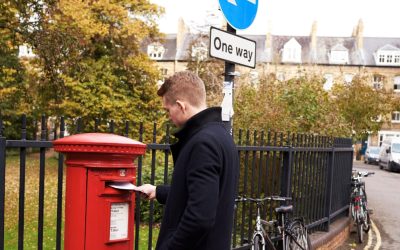
There’s a common misconception that the preference of Millennials and Gen Zs is to be communicated with via a digital-first approach, but what if we told you that an engaging piece of direct mail can be just as effective. A recent study by JICMAIL has highlighted the effectiveness of direct mail, in driving traffic online from a younger audience. An engaging direct mail piece can often be the first in a series of touchpoints throughout the customer journey, and start the domino effect in generating actions such as Social Media interaction, and new web traffic. The results of the JICMAIL studies proves, just how effective mail can be in generating interest from a younger audience and that Direct Mail is still as relevant in 2023 as it ever has been. If you’re not including this in your marketing mix you may be missing out.
Everyone is used to receiving Direct Mail, right? Well not necessarily.
Most people can remember the excitement they felt when they heard the ping from their computer when they received their first email. As online marketing became increasingly prevalent this excitement began to fade for most – the opposite can be said for Direct Mail. As mail volumes have reduced over the years, the same excitement can now be felt when a letter arrives through the door.
For this younger audience, receiving Direct Mail can be somewhat a right of passage as they may have never received Direct Mail addressed to them previously.
Now we’re not suggesting that Millennials are going to give up their smartphones and tablets any time soon, but rather that Direct Mail can be a highly effective tool in a successful marketing mix. For many businesses the objective of these mail pieces will be to encourage recipients to engage online, this is now easier than ever. With the ability to easily integrate bespoke QR codes and messages into your Direct Mail pieces, marketeers are now able to communicate with this younger audience using a language they understand, whilst complimenting digital channels.
Maximise the effectiveness of your Direct Mail. The do’s and don’ts when communicating with a younger audience.
So, we know that Direct Mail is an effective medium to communicate with Millennials and Gen Z’s, but how do you make it work for you? As is the case for any communication the data must be accurate and the message has to be engaging – you need to make sure you are sending the right message to the right person, at the right time. So, what does this look like in the form of physical mail? Gen Z’s and Millennials will expect to be treated as individuals, so it’s important to know your audience. Do you have visibility of purchase history, location or anything else that is unique to the recipient? If you have, this is a great place to start. Send them an offer on a new jacket to go with the shirt they just bought, tell them about the new branch you’ve opened that’s local to them, or tell them where the donation they made last year went. These are just a few examples of how to effectively use personalisation when addressing this new audience. With the latest digital printing technology, it’s easy to mirror the hyper-personalised digital approach in your physical communications, without having to break the bank.
Once your data is in order, ensure that your message is concise with a clear call to action. Consider using things such as bespoke QR codes to help easily direct traffic online. If you’re trying to drive footfall into stores, include a physical voucher that needs to be scanned at checkout. Discount codes and offers are always greatly appreciated.
Do you want to add Direct Mail into your marketing mix, but don’t know where to start? Talk to the experts at bakergoodchild.
If you’ve never used Direct Mail to communicate with Driving Gen Zs and Millennials, the prospect of planning a campaign on your own can be a daunting prospect. If you’d like to work with a partner that’s able to manage all aspects of this campaign for you, from Data through to Print, Fulfilment and Postage; then please get in touch with bakergoodchild today, on 0800 612 1972, or email [email protected]